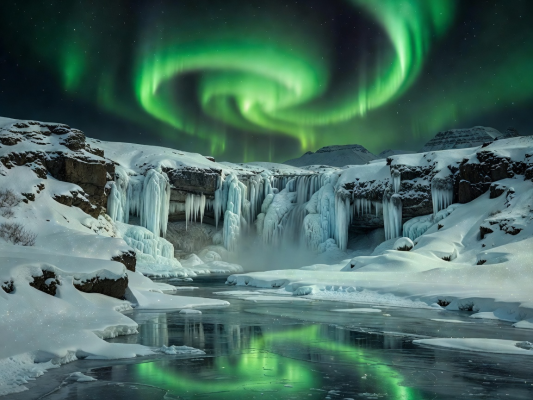
Iceland in winter is an otherworldly environment of black sand beaches, crystalline ice caves, and thunderous frozen waterfalls. But the crown jewel of the winter months is the Aurora Borealis. Our 6-day Iceland Northern Lights chase is highly specialized, designed for creators who want to master nighttime photography and capture the stark, minimalist beauty of the sub-Arctic landscape.
Destination Overview & Why It Works for Creators
Shooting the Northern Lights is one of the most technical challenges in photography. It requires a deep understanding of manual camera settings, focus stacking in the dark, and post-processing raw files to bring out the colors without introducing heavy noise. This expedition acts as a masterclass in low-light and long-exposure photography. During the brief daylight hours, the low angle of the sun provides continuous "golden hour" lighting, casting dramatic shadows across the snow-covered terrain.
Typical Itinerary Structure
Because the Aurora is entirely dependent on solar activity and clear skies, our itinerary remains flexible. We base ourselves along the South Coast to maximize our chances.
- Days 1-2 (Reykjavík to Vík): We depart the capital and head east. Daytime stops include the Seljalandsfoss and Skógafoss waterfalls. Workshops focus on long-exposure water photography using ND filters. At night, we conduct our first Aurora hunt and camera settings masterclass.
- Days 3-4 (Vatnajökull & Diamond Beach): We explore the glacial lagoon of Jökulsárlón, capturing giant blue icebergs washing up on the black volcanic sand. We also venture into a natural ice cave (weather permitting). The contrast of blue ice and black sand provides incredible texture for drone videography and landscape shots.
- Day 5 (South Coast return): We utilize this day to chase clear skies, wherever they may be. We revisit key locations along the coast for sunset, followed by a final, intensive editing session focused on noise reduction and color grading Aurora raw files.
- Day 6: Morning soak in a geothermal lagoon to thaw out before transferring to the airport for departure.
Accommodation & Facilities
We stay in modern, rural guesthouses chosen specifically for their remote locations away from city light pollution. This means that if the Aurora appears, you can often shoot it directly from the patio of your accommodation. Rooms are heated and comfortable, providing a cozy base for our late-night editing workshops and ample power points for the constant recharging of cold batteries.
What to Pack for Content Creation
Winter in Iceland is brutal on camera gear and humans alike. Preparation is everything:
- A sturdy, heavy tripod. Icelandic winds can easily blow over lightweight travel tripods, ruining long exposures.
- A fast, wide-angle lens (e.g., 14mm or 16mm at f/2.8 or faster) is mandatory for capturing the expansive night sky.
- Multiple spare batteries. Cold weather drains lithium-ion batteries incredibly fast. Keep spares in an inner pocket close to your body heat.
- Extreme cold-weather clothing: insulated waterproof boots, thermal base layers, a windproof outer shell, and photography gloves (gloves that allow you to fold back the fingertips to operate camera dials).
- A headlamp with a red-light setting to preserve your night vision while adjusting camera settings in the dark.
Physical Requirements & Pacing
The pacing of this trip is highly unusual. Because we are chasing the lights, we may be out shooting from 10 PM until 3 AM. Consequently, mornings start late. The physical exertion is relatively low—most shooting locations are a short walk from the vehicles—but the environmental endurance required is extreme. Standing still in sub-zero, windy conditions for hours requires mental toughness and proper gear.
Pros & Cons of Group Travel Here
Pros: Winter driving in Iceland is dangerous; whiteouts and black ice are common. Traveling with our experienced local drivers in modified super-jeeps or robust winter vans ensures safety. Furthermore, having creator hosts who can read solar weather apps and cloud cover charts drastically increases your chances of actually finding and successfully photographing the Aurora.
Cons: The weather dictates everything. If a multi-day storm rolls in, the itinerary will change, and the Aurora will be obscured by clouds. Flexibility and managed expectations are vital. You are at the absolute mercy of nature.
Cost & Inclusions Breakdown
The package covers all specialized winter transport, remote guesthouse accommodations, ice cave tour fees (with specialized local glacier guides), daily breakfasts, and expert astrophotography instruction. Flights to Keflavík (KEF), lunches, dinners, and specialized winter clothing/camera gear are the responsibility of the participant.